
Think Again: Attracting People Is Only Half the Challenge
Updated: Nov 9
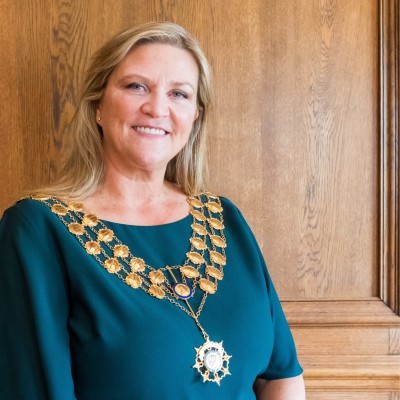
By Vicki Hughes, President of CIWM, with Dr Trang Dang, Policy, Innovation and Technical Services Executive at CIWM
We spend a lot of time talking about what the transition to a circular economy will require: investment, infrastructure, technology, policy and new business models. But there is another requirement that connects every one of them.
People.
Engineers, scientists, data specialists, finance professionals, designers, project managers, communicators, policy specialists, technicians, operators and future leaders. None of our ambitions for a more circular economy happen without people with the skills to turn them into reality.
And yet we have a problem. Many of those people may never consider working in our sector because they simply don't know the opportunities exist.
People can't choose careers they don't know exist.
When many people hear the words “waste industry”, they still picture bins, collection vehicles and landfills. Those essential activities are part of our sector, but they are nowhere near the whole story.
Behind them is an extraordinarily diverse industry involving engineering, science, technology, logistics, data, communications, sustainability, policy, finance, design, operations and leadership.
The gap between the sector we actually have and the sector people imagine is at the heart of my CIWM Presidential campaign, Think Again.
A recent opinion piece in Let’s Recycle argued that the sector's skills crisis is as much a marketing problem as a recruitment problem. There is considerable truth in that.
It highlighted examples of organisations changing the story they tell. Veolia's #WeAreResourcers campaign puts real employees at the centre of its communications, while Biffa reportedly attracted more than 400 applications for just ten maintenance engineering apprenticeship places by changing how and where those opportunities were marketed.
But the important point isn't simply that better marketing can produce more applications.
Perceptions are formed long before somebody starts looking for a job.
That's something we've also seen through Think Again. People aren't necessarily rejecting our sector. Too often, they simply don't know what is here.
Tell a student they could work in “waste” and one picture may come to mind. Tell that same person they could design automated sorting systems, use data to optimise resource flows, develop materials recovery technologies, finance infrastructure, create circular business models or help shape environmental policy, and suddenly the picture looks very different.
This isn't about inventing fashionable job titles or dressing jobs up as something they're not. It's about explaining what those jobs actually contribute.
Attraction is only the beginning.
There is a danger, however, in thinking better marketing alone will solve the skills challenge.
Getting somebody to look at our sector is one thing. Giving them a reason to build a career here is another.
And that matters across a sector made up of organisations of very different sizes. Large employers may have dedicated recruitment teams, graduate programmes, apprenticeship schemes and substantial marketing resources. Many SMEs and family businesses don't.
Their challenge may be not only how to attract new people, but how to persuade the people already around their businesses that this is somewhere they can build their future.
Can people see how a business is evolving? Can they develop and progress? Can they bring new technology, ideas and skills into it? Can they see purpose and opportunity?
That's why I increasingly think we need to look at sector attractiveness as a journey:
Discover > Join > Develop > Progress > Stay > Recommend
Recruitment sits within that journey. It isn't the whole of it.
Circularity needs many different skills.
We also need to challenge the idea that the circular economy is one profession.
It isn't. It is a systems challenge.
An engineer can apply circular thinking to materials, manufacturing and infrastructure. An architect can consider adaptability, reuse and disassembly. Finance professionals can help make circular infrastructure investable. Data specialists can make resource flows visible. Designers, scientists, lawyers, project managers, communicators and supply-chain professionals all have a role.
And we mustn't overlook practical skills. Repair, maintenance, refurbishment, sorting, assessment and recovery are fundamental to keeping products and materials in use.
Perhaps we should therefore think about circular economy knowledge as a professional capability that can complement many different careers, rather than assuming everybody needs “circular economy” in their job title.
We need to tell a better story – and make it true.
So yes, our sector needs to market itself better.
We need to reach schools, colleges and universities. We need authentic career stories, employer voices and content that reaches people outside our existing networks. And we need to explain jobs through their purpose, impact and opportunity rather than assuming people outside the sector understand our language.
But the experience people find when they arrive must live up to the story we tell them.
That means development. Progression. Inclusive workplaces. Modern businesses. Opportunities to learn. And people who are proud to say what they do and why it matters.
Think Again therefore isn't simply asking potential employees to change their perceptions of us.
It is asking us to Think Again too.
We want to hear from organisations that are changing how they attract, develop and retain people; from individuals willing to share their career journeys; and from partners who can help take those stories to audiences our sector does not traditionally reach.
Because ultimately, I don't just want a sector that more people discover.
I want a sector that people are proud to join, proud to develop their careers in, proud to stay in – and proud to recommend to the next generation.
We need to make people see the opportunity. Give them a reason to join us. And then give them a reason to stay.

Comments