



HEAR FROM INTERNATIONAL EXPERTS
Join this free online conference on 11-13 May 2026 and hear international speakers discuss the latest developments and approaches for risk assessing and mitigating the impact of PFAS & other contaminants (including 6PPD-quinone, Microplastics, Persistent Organic Pollutants, heavy metals, endocrine disruptors and recalcitrant compounds) on the environment.
Date: 7-9 July 2026
Format: Online
Price: Free to attend
MEET THE SPEAKERS
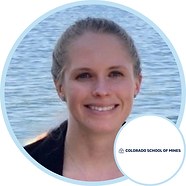
Sarah Balgooyen, PhD
Research Industry Liaison Officer, PFAS Mines
Colorado School of Mines
Sarah Balgooyen has a bachelor’s degree in chemistry from Michigan State University (2013) and a PhD in environmental chemistry from the University of Wisconsin-Madison (2019). She also has experience as a postdoctoral researcher in environmental engineering at the University of Wisconsin-Madison (2019-2022) and has worked as a research chemist at the USEPA’s Great Lakes Toxicology and Ecology Division in Duluth, MN (2022-2025). Her research for the last 6 years has focused on fate and transport of PFAS in the Great Lakes basin, including tributary and groundwater movement, sediment sorption, and bioaccumulation in fish.
Sarah serves as an additional LC-MS laboratory manager alongside Alex Liethen, while also serving as the Research Industry Liaison Officer for PFAS@Mines. Sarah has 10 years of LC experience and 5 years of MS experience. Her expertise lies in PFAS research, and she has experience developing extraction and LC-MS methods for PFAS in various matrices like water, soil, and animal tissue.
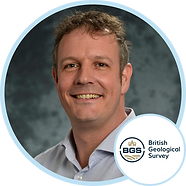
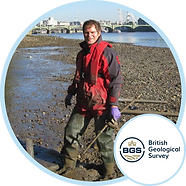
Dr Darren Beriro
Principal Geoscientist
British Geological Survey (BGS)
Dr Darren Beriro specialises in land contamination, soil chemistry, exposure assessment, and associated digital decision support tools. He leads research and stakeholder engagement on contaminated land, urban geoscience, and emerging pollutants such as PFAS, integrating geochemical and geological data to inform policy and planning. Darren has extensive experience working with government, industry, and academia to develop evidence-based tools and standards that support sustainable land use and public health protection. His work contributes to national and international initiatives on environmental quality, data infrastructure, and innovation in applied geoscience. Darren is the current chair of the National Brownfield Forum, recently co-leading research on the interactions of policies affecting the planning and development of brownfield land.

Emil Damgaard-Moller
Senior Consultant
Danish Technological Institute
Emil is a consultant with a background in materials chemistry, specializing in the mitigation and phase-out of PFAS materials. His work includes substituting fluoropolymers in high-performance products, developing AI solutions for PFAS mitigation, educating production companies on PFAS avoidance, and assisting the textile industry in phasing out and identifying PFAS in products and processes.
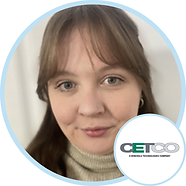
Rebecca Dickman Ph.D.
Technical Services Manager
CETCO
Rebecca Dickman completed a PhD in Environmental and Analytical Chemistry with a specific focus on PFAS in wastewater and biosolids. This included developing analytical techniques and collaborating with engineers and field scientists to address the concern of CEC in water and the environment. Currently her role with CETCO is to provide technical support and outreach regarding FLUORO-SORB Adsorbents which is a surface modified clay adsorbent with high selectivity for PFAS. FLUORO-SORB Adsorbent has a wide range of deployment options including water treatment in pressure vessels, in-situ remediations in soil and ground water, as well as several other environmental remediation techniques.
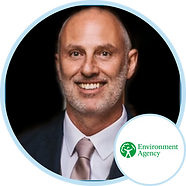
Michael Hughes
National Senior Advisor
UK Environment Agency
Michael works in the National Land & Contamination Management Team at the Environment Agency, specialising in the investigation and remediation of contaminated land. He has over 25 years’ experience working in this field, - initially in the private sector and then moving across into Government.
He graduated with a degree in Environmental Biology and went on to study Environmental Technology at masters level. Michael is a Chartered Scientist, Chartered Environmentalist, Chartered Water and Environmental Manager, and a Specialist in Land Condition (SiLC).
In recent years, Michael has focused on an emerging area of contamination associated with the PFAS family of chemicals. Working collaboratively with colleagues, he has contributed to assessing the nature and scale of the PFAS issue across the UK, initially at a national level and, as the evidence base has developed, increasingly targeting specific sites of concern. Drawing on his expertise in contaminated land, he has supported the implementation of programmes of site inspection and risk evaluation. The growing number of PFAS-affected sites in the UK, and the complexities associated with their management, highlight the significant challenges facing regulatory authorities.
.png)
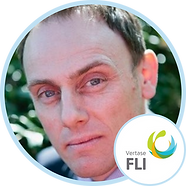
Mark Field
Bid Director
Vertase
Mark is Bid Director at Vertase. He has over twenty years’ experience working within the contaminated land and remediation industry, including roles within multinational consultancies, remediation contractors and regulators.
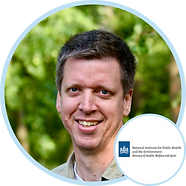
Thijs de Kort
Acting head of Bureau REACH
RIVM National Institute for Public Health and the Environment
Thijs studied ecotoxicology at Vrije Universiteit Amsterdam and works as the coordinator of REACH restrictions and as deputy head of Bureau REACH at the National Institute for Public Health and the Environment (RIVM). He has been managing the REACH UPFAS restriction dossier for the Netherlands since 2022.
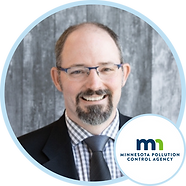
Kirk Koudelka
Assistant Commissioner - Land Policy
Minnesota Pollution Control Agency
Kirk Koudelka was appointed assistant commissioner for land policy and strategic initiatives in May 2012. Prior to that, Kirk served as the legislative director at the MPCA. He led the agency’s legislative efforts for the 2011 through 2014 legislative sessions in both roles.
Before coming to the agency, Kirk spent 11 legislative sessions at the Minnesota House of Representatives in various capacities, including committee administrator of the House Environment and Natural Resources Policy Committee. His role included administering the Solid Waste, Recycling and Resources Conservation Working Group focusing on state-level changes, but also internal changes at the Legislature. Kirk has a Bachelor of Arts in political science and history from Hamline University.
.png)
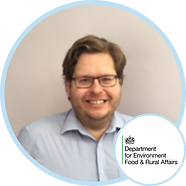
Edward Latter
Chemicals Policy Team
Department for Environment, Food and Rural Affairs (Defra)
Ed is Team Leader for the Chemicals policy team in Defra’s Chemicals Pesticides and Hazardous Waste division; managing a team of policy advisers on emerging chemicals policy issues. He has over five years experience working in Defra delivering science programmes and environmental policy. Prior to this he was a university researcher working in partnership with industry, specialising in physical chemistry and spectroscopy analysis.
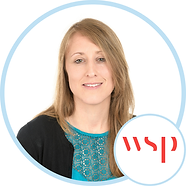
Helen Di Lauro
Head of Discipline – Ground and Water
WSP
Heather is the Service Line Director for WSP's Ground and Water team in the UK, bringing 20 years of experience in environmental consultancy. As a Chartered Scientist and full member of the Institute of Environmental Sciences, she's proud to be a registered SiLC (Specialist in Land Condition). Leading a dedicated team of 200 specialists, they tackle everything from contaminated land to hydrogeology, geoscience, and demolition and decommissioning.
Heather's expertise lies in managing and directing projects focused on investigating and remediating soil and groundwater. She's worked across various areas such as liability assessment, acquisition, divestment, planning, and permitting. Her experience spans multiple sectors, including manufacturing, power generation, oil and gas, and waste management. Notably, she's led numerous PFAS-related projects, primarily in the industrial space, and collaborate with the Environment Agency on their PFAS screening initiative.
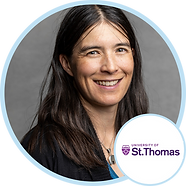
Ali Ling, PhD, PE
Assistant Professor Civil Engineering
University of St Thomas
Ali is an assistant professor in the Civil Engineering department at the University of St. Thomas, where she helps students learn to solve complex problems. In her research, she applies systems thinking to emerging contaminants to better understand economic, environmental, and human health impacts of their use, management, and treatment. Prior to joining St. Thomas, Ali spent ten years in consulting designing and troubleshooting water and wastewater treatment systems.
.png)
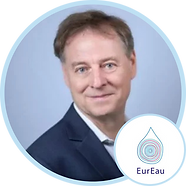
Oliver Loebel
Secretary General
EurEau (European Water Services)
Oliver Loebel has been secretary general of EurEau, European federation of national associations of water services since 2016. The federation and its 38 member organisations work at all levels to protect our water resources for today’s and for future generations.
Prior to this, Oliver spent eight years as managing director with PU Europe. Before this, he worked as director for sector policy at the European SME association UEAPME and represented the building services industry at European level through CEETB. Between 1994 and 1997, Oliver worked with the European Commission, developing support measures for Europe’s small businesses.
Oliver received his university degree in Economics at the Berlin School of Economics (Germany) and an MBA in International Business at École des Ponts et Chaussées (Paris, France).
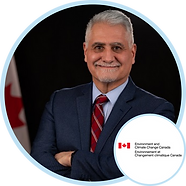
Marc D’Iorio
Assistant Deputy Minister of the Science and Technology Branch
Environment and Climate Change Canada
Marc D’Iorio was appointed Assistant Deputy Minister of the Science and Technology Branch on February 1, 2021. Marc began his career in government as a post-doctoral fellow in climate change. He has worked in a number of positions as a scientist, a manager, and a leader of organizations that conduct research, fund science, or use science to make policy and regulatory decisions.
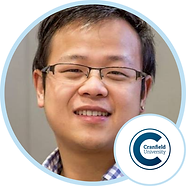
Dr Tao Lyu
Senior Lecturer in Green Technologies, Faculty of Engineering and Applied Sciences
Cranfield University
Dr Tao Lyu has been working at Cranfield University since April 2020. He is now a Senior Lecturer in Green Technologies and Environmental Engineering MSc course director (JSU-CU Institute). He was awarded a PhD in Environmental Sciences from Aarhus University, Denmark (2016). His PhD research focused on emerging organic contaminants (micropollutants) removal in water and wastewater by Nature-based solutions, in particular Constructed Wetlands. After completing the project in the same department as an assistant researcher (2016.09-12), he moved to Nottingham Trent University as a Research Fellow (GCRF funded) in 2017. In September 2019, he was appointed as a Module Leader and lectured two modules to BSc (Hons) Environmental Sciences students.
He expanded his research area on advanced nanotechnology development (e.g. nanobubble technology) for natural water restoration, eutrophication control, Harmful Algal bloom removal and sediment remediation.
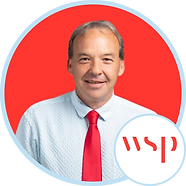
Leonard Mankowski
Vice President, Geology
WSP in the US
Len Mankowski is a VP - Geology at WSP with over 18 years of site characterization and remediation experience at contaminated Sites across the United States. His primary areas of expertise include: innovative remedial investigation techniques; hydrogeologic and conceptual site model development; emerging contaminants; and conceptual remedial design/technology assessments. Len earned a Bachelor of Science degree (applied geophysics, 1999) and a Master of Science in (geology, 2023) from Michigan Technological University and was an instructor at Michigan Technological University prior to entering consulting. Mr. Mankowski has published and/or presented several papers on applied, innovative characterization and remediation approaches.
.png)
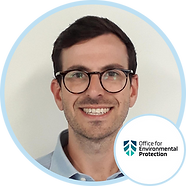
Richard McKinlay
Principal Consultant
on behalf of the Office for Environmental Protection
Richard McKinlay is a Principal Consultant at WRc, is a Process Engineer with over 13 years experience in waste and recycling. Formerly Head of Technical Development for a major UK metals and plastics recycling company, Richard now manages and delivers a wide range of consultancy projects, with a focus on POPs waste assessment and treatment methods. WRc recently conducted research on 'POPs in Waste: Regulatory Review and Capacity Modelling’, which was commissioned by the Office for Environmental Protection (OEP).
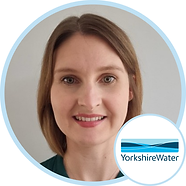
Gemma Nicholson
Raw Water Catchment Risk Manager
Yorkshire Water
Gemma Nicholson is a Raw Water Catchment Risk Manager at Yorkshire Water with 13 years of experience of assessing catchment risks to water quality. Gemma is a Chartered Environmentalist and has a MSc in Environmental Engineering and Project Management. She adapts to meet the needs of the business, developing successful new approaches to catchment risk assessment, and has built effective working relationships across Yorkshire Water and its stakeholders. Gemma has led the formation of a specialist team which she now leads, and this has resulted in Yorkshire Water having a greater knowledge of their catchment risks and improved understanding to implement their long-term strategic plans.
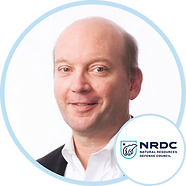
Erik Olson
Senior Strategic Director for Health & Senior Attorney
Viridi Parente
Erik D. Olson is Senior Strategic Director for Health & Senior Attorney at the Natural Resources Defense Council. He has over 40 years of experience and helps to lead NRDC’s strategy on toxic chemicals and on drinking water. Previously, Erik oversaw key health projects at The Pew Charitable Trusts, including campaigns to address toxic chemicals in food and to enact the first overhaul of FDA’s food safety law in 70 years.
Prior to Pew, he was General Counsel and Deputy Staff Director for the U.S. Senate Committee on Environment and Public Works, focusing on addressing environmental health threats and on climate change. Prior to his Senate stint, he led NRDC’s health program, advocacy center, and campaigns to strengthen the Safe Drinking Water Act and national pesticide laws. He has litigated precedent-setting federal cases on drinking water, Superfund, pesticides, toxics and other issues at NRDC, the National Wildlife Federation and EPA. His law degree is from the University of Virginia and his Batchelor’s is from Columbia University in New York.

Marie Raffin
Associate Director
WSP UK
Marie Raffin is an Associate Director at WSP, UK. She has over 10 years’ experience in potable and wastewater research and innovation spanning from technology assessment to business alignment with the governance and regulation of the water industry. Prior to joining WSP in 2022, Marie worked for Thames Water where she managed multiple projects in the water reuse, potable and wastewater areas including, but not limited to, implementation of R&D solution from ideation to BAU operation, process optimisation, assessment of water treatment plant condition and process operation. Marie assessed the feasibility of water reuse for potable and non-potable applications for the Thames Water region through the WRMP14 to WRMP24 cycles, where she focused on assessing and selecting appropriate technologies, and understanding how they are influenced by governance, regulation, risk mitigation and public perception. She also led the development and the delivery of the environmental monitoring programme for the Thames Water strategic resource options.
Marie is the Chair of Water Reuse Europe’s board of directors.
.png)
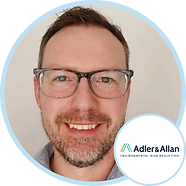
Chris Ramsbottom
Strategic Projects Director
Adler & Allan
Chris is Strategic Projects Director at Adler & Allan. At Adler and Allan, strategic environmental projects typically involve direct work with customers and regulators on the remediation of complex environmental problems that require the seamless integration of multiple technical services, often across several phases of activity and extended timescales. The key is to agree an overall aim for the project before then developing a detailed plan that’s acceptable to the client and relevant regulatory bodies. Chris' team do that, before then turning their attention to delivering the project to the required standard.
At university, Chris studied geography and geology, then a postgraduate course on vegetation and soil slope stability, before starting as a Graduate Geo-Environmental Engineer. Over time he focused on contamination and pollution issues, building his experience and reputation for successfully directing increasingly complex and strategically significant pollution projects.
Adam Stonewall
Hydrologist and Surface Water Specialist
Oregon Water Science Center, U.S. Geological Survey
Adam has been a Hydrologist in the Oregon Water Science Center since 2001. His background is primarily in flood frequency analysis. Adam also have strong interest and/or experience in statistical testing for nonstationarity, climate change, monte-carlo simulations and nonparametric statistics.
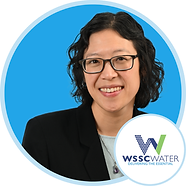
Dr Priscilla To
Director, Operational Reliability and Resilience
WSSC Water
As director of the Department of Operational Reliability and Resilience, Priscilla drives strategic initiatives to enhance the long-term reliability, resilience and efficiency of our watersheds, water and wastewater systems. She leads a team that integrates Smart One Water principles, data-driven innovation and technology, and internal and external collaborations to advance operational sustainability and performance, preparing WSSC Water for environmental challenges like drought and emerging contaminants while navigating increasingly stringent regulatory requirements.
A licensed professional engineer, Priscilla holds a Bachelor of Science in Mechanical Engineering from the University of Illinois at Urbana-Champaign (UIUC), a Master of Science in Civil and Environmental Engineering from Stanford University and a PhD in Civil and Environmental Engineering from UIUC. Before joining WSSC Water, she lived and worked in Singapore, researching emerging contaminant treatment, teaching Environmental Science and Engineering at a community college and raising her two children.
.png)
Dr Christopher Vane
Head of Organic Geochemistry
British Geological Survey (BGS)
Dr Christopher Vane is Head of Organic Geochemistry at the British Geological Survey. His focus is on the use organic compounds to solve problems in climate and environmental change, energy and pollution. He has conducted geochemical surveys 15 different countries spanning South East Asia, Africa, North America and Europe. He has authored/co-authored ~160 academic papers exploring persistent pollutants in London and Glasgow soils, fungal decomposition of lignin, hydrocarbon resource as well as natural carbon stores in mangroves and salt marshes. Recent projects in the sphere of contaminant chemistry include tracking spatial and temporal distribution of multiple emerging organic pollutants in urban waterways-rivers estuaries (Thames, Milford Haven, Nairobi, Red-River (Hanoi), Conwy). This summer, his lab. is currently engaged in understanding contaminant transfers (pesticides, pharma, rubber additives) that occur during the application of biosolids to agricultural soils and associated ground waters.

Anna Watson
Water Policy Specialist; Sea Grant UW Water Science -Policy Fellow, the Center for Water Policy
University of Wisconsin - Milwaukee
Anna Watson is a Water Policy Specialist and Sea Grant UW Water Science-Policy Fellow at the Center for Water Policy. She holds a Juris Doctorate from Washington University School of Law and a Bachelor of Arts in Environmental Studies from Butler University.
During law school, Anna worked for Great Rivers Environmental Law Center and the Environmental Protection Agency’s Office of General Counsel. She also worked as a student attorney in Washington University’s Interdisciplinary Environmental Clinic.
At the Center for Water Policy, Anna performs water law and policy research and coordinates the Freshwater Collaborative of Wisconsin Water Policy Network.
.png)
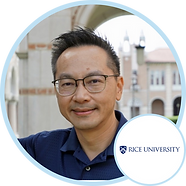
Michael Wong
Professor, Chemical and Biomolecular Engineering, Rice Water Institute
Rice University, USA
Michael S. Wong, Ph.D, is professor and chair of the Department of Chemical and Biomolecular Engineering at Rice University (Houston, Texas). He is also professor of Chemistry, of Civil and Environmental Engineering, and of Materials Science and Nano Engineering. He holds the Tina and Sunit Patel Chair in Molecular Nanotechnology. He is Research Thrust Leader in the NEWT (Nanotechnology Enabled Water Treatment) Center and in the Rice WaTER Institute. His research team has authored over 200 publications, cited over 17,000 times. He received the Lawrence K. Cecil Award, the highest environmental honor in chemical engineering. He is a Fellow of AIChE, ACS, and RSC.