


INTRODUCTION
PFAS and emerging contaminants have become some of the most significant liabilities facing landowners, asset managers and utilities affecting water, wastewater and soils.
This free online conference discussed the latest developments and approaches for risk assessing and mitigating the impact of PFAS & other contaminants (including 6PPD-quinone, Microplastics, Persistent Organic Pollutants, heavy metals, endocrine disruptors and recalcitrant compounds) on the environment.
The event, on 7-9th July, shared insights on how to understand, treat and remediate PFAS and other contaminants through practical, international examples of innovative approaches and techniques.
We also explored the latest regulatory updates and scientific approaches, to help you effectively assess and mitigate potential liabilities, and communicate the real risk to stakeholders and investors.
Date: 7-9 July 2026
Format: Online
Price: Free to attend/watch on-demand
GLOBAL, CROSS-SECTOR AUDIENCE
This event brought together...

Over 1600 regulators, remediation, contaminated land and water quality specialists, PFAS leads, engineers, toxicologists, environmental consultants, financial risk managers and lawyers

From over 850 companies

21 industries including chemical and pharmaceutical, water utilities, government, environmental consultancies, laboratories, manufacturing, waste firms, construction, investment and legal

Representing over 70 countries across the globe
EVENT OVERVIEW
.png)
Day One: Regulation and Compliance
Tuesday 7th July
1-4pm BST / 8-11am ET
-
Understanding the Regulatory & Policy Backdrop
-
Conducting Effective Due Diligence to Identify & Manage Environmental Risks and Liabilities from PFAS and Other Contamination
.png)
Day Two: Investigating, Monitoring and Remediating Contaminants in Soil and Waste
Wednesday 8th July
2-4:30pm BST / 9-11:30am ET
-
Novel Approaches and Technologies for Remediating Contaminants in Soil
-
Investigating, Sampling, Analysing and Monitoring Contaminants in Soil and Waste
.png)
Day Three: Investigating, Monitoring and Remediating Contaminants in Water, Wastewater and Biosolids
Thursday 9th July
1-4:30pm BST / 8-11:30am ET
-
Investigating, Analysing, Monitoring and Remediating Contaminants in Surface, Ground, Storm and Drinking Water
-
Investigating, Monitoring and Remediating Contaminants in Wastewater and Biosolids
EVENT AGENDA
DAY ONE
Regulation and Compliance
In Day One, we will set the scene of the evolving regulatory landscape governing PFAS and other contaminants, and explore strategies to minimise environmental risks and liabilities.
Tuesday 7th July, 1-4pm BST / 8-11am ET
1pm BST / 8am ET
Welcome from Environment Analyst
Session 1: Understanding the Regulatory & Policy Backdrop
The cost of PFAS pollution In Europe could reach €440 billion by 2050, if the current pollution levels continue without regulatory action, finds a recent study by the European Commission.
This session will bring together international regulatory experts to discuss current and proposed regulatory action driving the investigation and remediation of PFAS and other contaminants, and how to navigate the divergence of regulations around the globe.
Exploring the UK government’s PFAS Plan
On 3 February 2026, the UK Government fulfilled its commitment, made in the revised Environmental Improvement Plan 2025, by unveiling a new plan to better protect the nation and environment from harmful forever chemicals. The UK’s first-ever PFAS Plan sets out how we are working across government, industry, regulators, agencies, the scientific community and the public to: understand the sources of these chemicals, tackle how they move around in the environment, and act to reduce public and environmental exposure. The plan reflects the government’s commitment to protect public health and the environment while supporting innovation and economic growth.
This presentation will provide an overview of the plan, regulatory initiatives and drivers, proposed future regulations, and give an update on delivery.
It will also outline the Environment Agency's PFAS risk screening approach, with case study examples.
Michael Hughes, National Senior Advisor, UK Environment Agency
Edward Latter, Chemicals Policy Team, Defra (UK Department for Environment, Food & Rural Affairs)
Navigating Regulation and Policy in Europe
Get an update on the final opinion of the European Chemicals Agency (ECHA)’s Risk Assessment Committee (RAC) and the draft opinion of the Scientific Committee for Socio-Economic Analysis (SEAC).
Impact of the new hazard classes for Endocrine Disruptors and Persistent, Mobile, and Toxic substances in the EU’s CLP regulation.
Thijs de Kort, Acting head of Bureau REACH, RIVM National Institute for Public Health and the Environment
Overview of Canada’s Regulatory Framework and Tools for Managing Chemicals
ECCC’s Assistant Deputy Minister of Science and Technology, Marc D’Iorio will provide an overview of Canada’s regulatory framework and tools for managing chemicals, including the role of the Chemicals Management Plan in reducing risks to Canadians and the environment.
This presentation will highlight Canada’s approach to assessing and managing classes of chemicals, and provide updates on current priorities related to plastics and per- and polyfluoroalkyl substances (PFAS), including ongoing assessment and risk management activities.
Marc D’Iorio, Assistant Deputy Minister of the Science and Technology Branch, Environment and Climate Change Canada
US Federal and State-level Regulations
Get insights into the U.S. Environmental Protection Agency (EPA)’s Forever Chemical Regulation and Accountability Act of 2026, and state-level regulations.
Plus get an update from the Minnesota Pollution Control Agency on how they're working PFAS into their regulatory and permitting programs for solid waste, wastewater and biosolids.
Erik Olson, Senior Strategic Director for Health & Senior Attorney, Natural Resources Defense Council
Kirk Koudelka, Assistant Commissioner - Land Policy, Minnesota Pollution Control Agency
Short comfort break
Session 2: Conducting Effective Due Diligence to Identify & Manage Environmental Risks and Liabilities from PFAS and Other Contamination
-
PFAS are persistent, mobile and toxic, are often described as ubiquitous, and are usually very costly to deal with. However, awareness and understanding of environmental risks and liabilities presented by PFAS lags behind other contaminants, which creates uncertainty about what to do and how to do it, which in turn impacts environments, businesses and communities. This session focuses on due diligence as an early step towards mitigating the impacts.
-
Chris will summarise the process of carrying out environmental due diligence, highlighting why it’s needed and the overarching approach, and drawing out PFAS-specific aspects.
-
This presentation will provide attendees with increased awareness of the issues and pragmatic takeaways for carrying out due diligence.
-
The overall focus to start learning about your exposure to PFAS problems is to understand your site and understand your operations.
Chris Ramsbottom, Strategic Projects Director, Adler & Allan
Rethinking PFAS Phase-Out: A Question of Cost, Not Chemistry
Emil from the Danish Technological Institute challenges the assumption that PFAS substitution is a technical problem. The real bottleneck, he argues, is cost — and overcoming it requires a new mindset from both regulators and industry. This talk explores how a functionality-based approach, supported by economies of scale and learning-curve effects, can enable a successful PFAS phase-out across products.
Emil Damgaard-Moller, Senior Consultant, Danish Technological Institute
Closing remarks and end of Day One
3:05pm BST / 10:05am ET
1:05pm BST / 8:05am ET
3:10pm BST / 10:10am ET
3:35pm BST / 10:35am ET
3:55pm BST / 10:30am ET
WHO SHOULD ATTEND?
-
Remediation Specialists
-
Land Quality specialists
-
Water Quality specialists
-
Hydrogeologists
-
Geologists
-
PFAS Leads
-
Environmental Scientists
-
Contaminated Land Specialists
-
Chemists, Scientist
-
Technical Directors
-
Environmental Professionals
-
Engineers
-
Toxicologists
-
Practitioners
-
Consultants
-
Geo-Environmentalists
-
Groundwater Specialists
MEET THE 2026 SPEAKERS
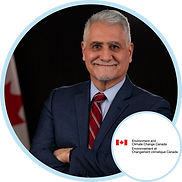
Marc D’Iorio
Assistant Deputy Minister of the Science and Technology Branch
Environment and Climate Change Canada
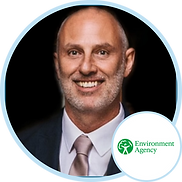
Michael Hughes
National Senior Advisor
UK Environment Agency
.png)
Michael Wong
Professor, Chemical and Biomolecular Engineering, Rice Water Institute
Rice University, USA

Ali Ling, PhD, PE
Assistant Professor Civil Engineering
University of St Thomas
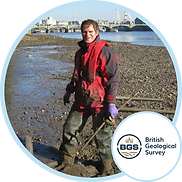.png)
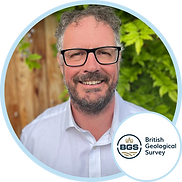
Dr Christopher Vane
Head of Organic Geochemistry
British Geological Survey (BGS)
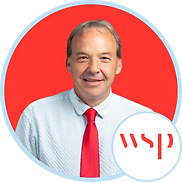
Leonard Mankowski
Vice President, Geology
WSP in the US
Gemma Nicholson
Raw Water Catchment Risk Manager
Yorkshire Water

Anna Watson
Water Policy Specialist; Sea Grant UW Water Science - Policy Fellow, the Center for Water Policy
University of Wisconsin - Milwaukee
.png)
Mark Field
Bid Director
Vertase
Kirk Koudelka
Assistant Commissioner - Land Policy
Minnesota Pollution Control Agency
.png)
Oliver Loebel
Secretary General
EurEau (European Water Services)

Emil Damgaard-Moller
Senior Consultant
Danish Technological Institute
.png)
Dr Darren Beriro
Principal Geoscientist
British Geological Survey (BGS)

Sarah Balgooyen, PhD
Research Industry Liaison Officer, PFAS Mines
Colorado School of Mines

Dr Priscilla To
Director, Operational Reliability and Resilience
WSSC Water
.png)
Edward Latter
Chemicals Policy Team
Department for Environment, Food and Rural Affairs (Defra)

Dr Tao Lyu
Senior Lecturer in Green Technologies, Faculty of Engineering and Applied Sciences
Cranfield University

Thijs de Kort
Acting head of Bureau REACH
RIVM National Institute for Public Health and the Environment
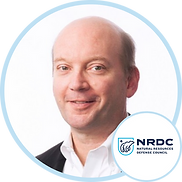
Erik Olson
Senior Strategic Director for Health & Senior Attorney
Natural Resources Defense Council

Adam Stonewall
Hydrologist and Surface Water Specialist
Oregon Water Science Center, U.S. Geological Survey

Rebecca Dickman Ph.D.
Technical Services Manager
CETCO
.png)
Richard McKinlay
Principal Consultant
on behalf of the Office for Environmental Protection
.png)
Chris Ramsbottom
Strategic Projects Director
Adler & Allan

Helen Di Lauro
Head of Discipline – Ground and Water
WSP UK

Marie Raffin
Associate Director
WSP UK
EVENT SPONSORS

Smarter Technologies, Whether You're Building Up or Cleaning Up.
We engineer some of the smartest, most reliable technologies and solutions to meet the needs of the industries and communities we serve. Discover our products and services that solve worldwide challenges in commercial, industrial, and infrastructure construction, environmental projects, water remediation, and more.
Engineering Know-how. In the lab and on the field.
Our R&D-based offerings set us apart as a global leader in solving even the most complex construction and environmental challenges. Defined by our dedicated scientific team and extensive laboratory services and equipment, we develop innovative, customized products and programs for a wide variety of applications. Our principal laboratory is equipped with state-of-the-art analytical equipment and is where our scientists develop new technologies and provide valuable insight into services that help us maximize efficiency, minimize costs, and enhance sustainability.
Remediating PFAS.
PFAS (per- and polyfluoroalkyl substances) are chemicals that can't break down easily in the environment and, due to their persistence, can impose health risks to humans. PFAS are pervasive and may be found in many consumer goods, from beauty products to cleaning products, nonstick cookware, stain-resistant coatings, and more. That's why we developed FLUORO-SORB® adsorbent technology, a proprietary, NSF-certified product designed to support global remediation efforts surrounding PFAS. Unlike other sorbent products that are selective and unpredictable in adsorbing PFAS, FLUORO-SORB® adsorbent binds the entire spectrum of PFAS (including PFOA, PFOS, PFHxS, and PFNA) without being affected by co-contaminants in the waste stream.

WSP is one of the world’s leading professional services firms, uniting its engineering, advisory and science-based expertise to shape communities to advance humanity. From local beginnings to a globe-spanning presence today, WSP operates in over 50 countries and employs approximately 83,000 professionals, known as Visioneers. Together they pioneer solutions and deliver innovative projects in the transportation, infrastructure, environment, building, energy, water, and mining and metals sectors.

We help businesses tackle five of the world’s most pressing environmental challenges with real-world solutions. Through actionable consultancy and expert engineering, we put ESG into action and create measurable impact – protecting the environment, strengthening resilience, and ensuring compliance.